

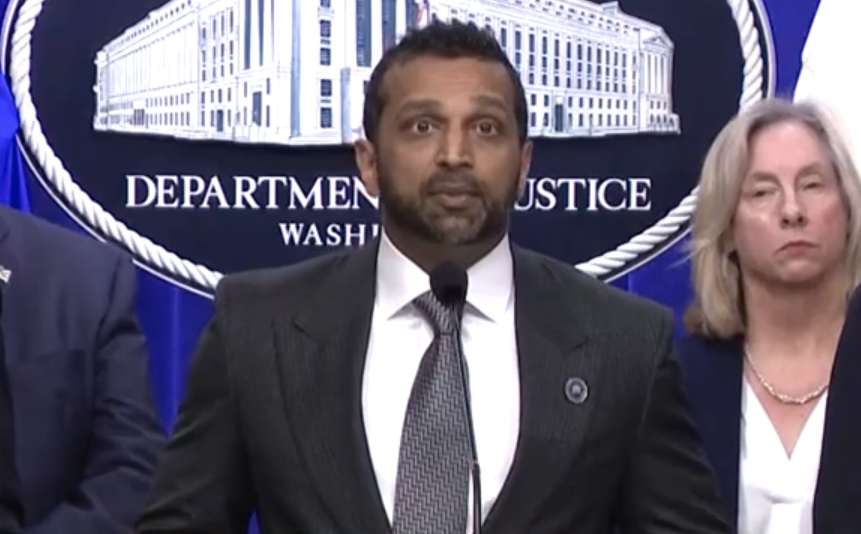
FBI Director Kash Patel announced that two international fugitives, Khalid Ahmed Satary and Emylee Thai, have been added to the FBI’s “Most Wanted Fraudsters” list as federal authorities unveiled a major healthcare fraud crackdown involving 455 suspects and more than $6.5 billion in alleged false claims. The announcement came during a joint federal news conference on the “National Health Care Fraud Takedown,” a sweeping effort aimed at Medicare, Medicaid, and other taxpayer-funded healthcare programs.
Satary and Thai are accused in separate healthcare fraud cases tied to genetic testing, with the alleged billing connected to the two suspects totaling well over $650 million. Satary is wanted in connection with an alleged $547 million healthcare fraud conspiracy, while Thai’s laboratory allegedly billed Medicare roughly $142 million and received about $95 million from those claims. Both have reportedly been on the run since 2022, with officials saying Satary may be hiding in the United Arab Emirates and Thai may be hiding in Vietnam.
According to federal information cited by Fox News and the Department of Health and Human Services Office of Inspector General, Satary owned several labs in Georgia, Oklahoma, and Louisiana. Authorities allege that companies connected to Satary and his co-conspirators paid illegal kickbacks and bribes to telemarketers in exchange for doctor’s orders for medically unnecessary cancer genetic tests, with the labs collectively billing Medicare more than $547 million.
Thai faces charges including conspiracy to commit healthcare fraud, conspiracy to defraud the United States, and paying and receiving healthcare kickbacks. Officials said she had previously been wearing an ankle monitor before fleeing. Her case now sits alongside Satary’s on the FBI’s fraud-focused most wanted list, a public-facing effort meant to bring pressure, tips, and attention to suspects accused of stealing from programs funded by American taxpayers.
Patel urged the public to help law enforcement track down both suspects, saying, “The American people and the world are our best sources of information.” He directed anyone with tips to contact the FBI through its tip portal or hotline, underscoring that the manhunt depends not only on federal agents but also on people who may know where these fugitives are hiding.
Acting Attorney General Todd Blanche described the broader operation as “the greatest combined federal and state effort in combating health care fraud in history.” He added, “Fraudsters can no longer rip off American taxpayers,” warning that those who cheat Americans will be found, stripped of assets, and prosecuted. Officials also described alleged spending on luxury items, including multimillion-dollar homes, a Maserati, expensive jewelry, and a beach resort project overseas.
Healthcare fraud is not a paperwork crime. Every fraudulent Medicare or Medicaid claim drains money from taxpayers, weakens programs meant for seniors and vulnerable Americans, and rewards criminals who learn how to exploit government systems. When alleged fraud schemes reach hundreds of millions of dollars, the cost is carried by working families, retirees, and patients who depend on honest care.
The government’s response matters because old enforcement models often allowed money to go out first and forced agencies to chase it later. Officials said the Trump administration is now using advanced data analytics and artificial intelligence to detect suspicious claims before taxpayer dollars leave the Treasury. That shift is critical: fraudsters should not be allowed to treat Medicare and Medicaid like personal bank accounts, and fugitives accused of abusing the system must face justice before the damage grows even larger.
